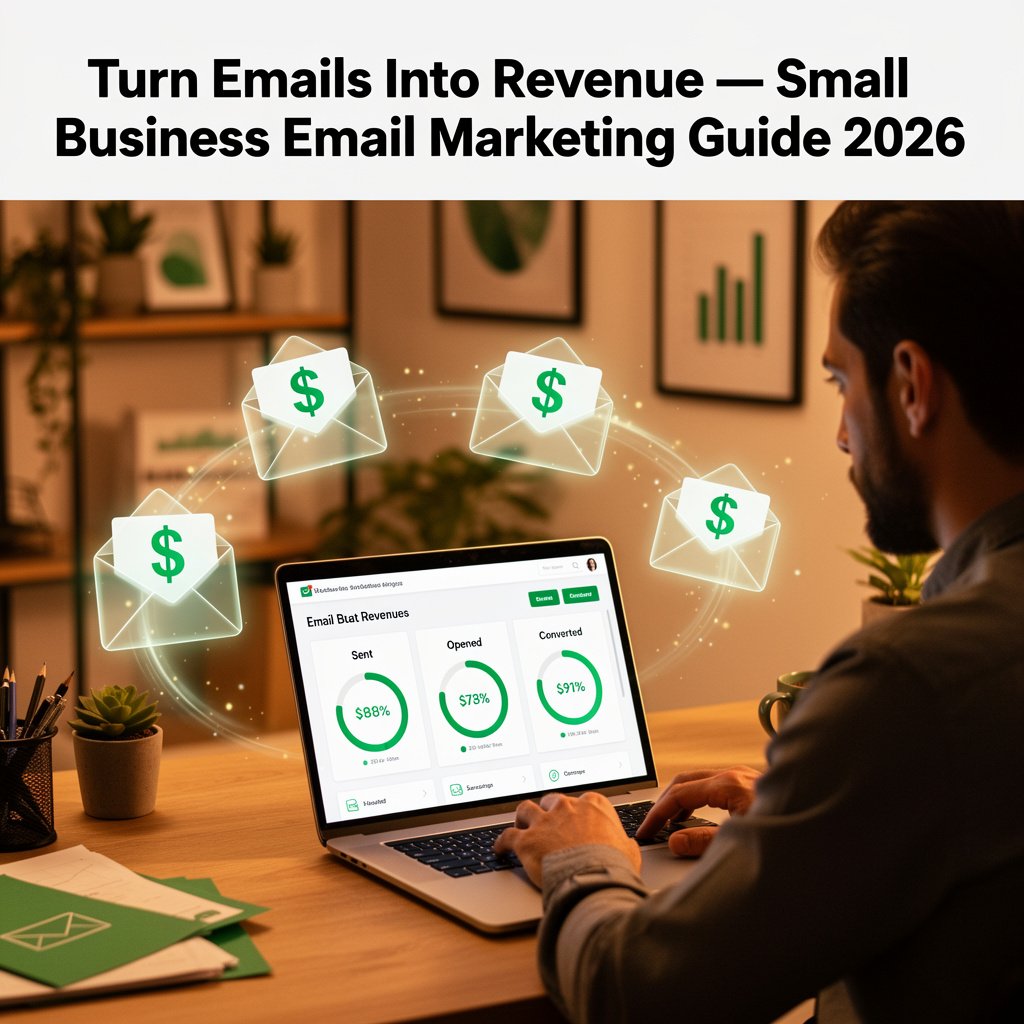
Email marketing consistently outperforms every other digital marketing channel for return on investment. The average ROI is $42 for every $1 spent — higher than social media advertising, search ads, and content marketing combined. Yet most small businesses either ignore email entirely or send occasional newsletters that nobody reads.
The difference between email marketing that generates revenue and email that gets ignored comes down to strategy: how you build your list, what you send, and when you send it. This guide covers the complete email marketing process for small businesses starting from zero.
Why Email Marketing Works Better Than Social Media
Before building your list, it is worth understanding why email deserves priority over social media:
You own the list: Facebook can change its algorithm or shut your page down. Your email list belongs to you permanently.
Reach rate: The average organic Facebook post reaches 1-5% of your followers. Email reaches 80-90% of recipients' inboxes and achieves 20-25% open rates on average.
Purchase intent: People who join your email list are expressing interest in hearing from you. Social followers are passive; email subscribers are active.
Personalization: Email allows segmentation and personalization that social media cannot match.
Step 1: Choose Your Email Marketing Platform
Before building a list, you need a platform to manage subscribers, design emails, and track results. For small businesses:
Mailchimp (Free up to 500 subscribers)
The most beginner-friendly platform with a generous free tier. Includes drag-and-drop email builder, basic automation, and analytics. Sufficient for most small businesses in their first 6-12 months.
Brevo (formerly Sendinblue) — Best Free Option
Brevo offers unlimited contacts on the free plan (capped at 300 emails/day). This makes it more practical than Mailchimp for businesses growing their list quickly. Includes transactional emails, SMS marketing, and basic CRM.
ConvertKit — Best for Content Creators
ConvertKit is designed specifically for bloggers, podcasters, and creators who want to build an audience and sell digital products. Its visual automation builder is exceptionally powerful.
Klaviyo — Best for E-commerce
Klaviyo integrates deeply with Shopify and WooCommerce, enabling purchase-behavior-based automation. Abandoned cart emails, post-purchase sequences, and product recommendations are Klaviyo's strengths.
Step 2: Create Your Lead Magnet — Give People a Reason to Subscribe
Nobody subscribes to a 'newsletter.' People opt in to receive something specific that solves their problem or gives them immediate value. This is your lead magnet.
Effective Lead Magnet Ideas
PDF guide or checklist: '10-Point Checklist for First-Time Home Buyers' — specific, immediately useful
Mini email course: '5-Day Email Course: Start Your Online Business' — delivers value over days
Free template: social media calendar template, budget spreadsheet, resume template
Discount code: '15% off your first order when you subscribe' — works well for e-commerce
Free audit, consultation, or assessment: 'Free 15-minute website review' — great for service businesses
Webinar recording or training video: exclusive content not publicly available
The key principle: your lead magnet must solve a specific problem your ideal customer has. A generic 'subscribe for updates' converts at 0.5-1%. A specific lead magnet converts at 5-15% or higher.
Step 3: Build Your Opt-In Forms
Once you have a lead magnet, you need opt-in forms in high-traffic locations:
Website Opt-In Placements
Pop-up (exit intent): appears when visitor moves cursor toward closing the tab — typically converts at 3-7%
Embedded form above the fold: visible without scrolling, highest real estate on any page
After blog posts: capture readers who finished an article and want more
Dedicated landing page: a page focused entirely on one offer with no distractions — for driving paid traffic
Floating bar at top or bottom of page: always visible as visitors scroll
Tools for creating opt-in forms: OptinMonster, Sumo, Mailchimp's embedded forms, or your ESP's native form builder.
Step 4: Build Your Welcome Sequence
The welcome sequence is the automated series of emails a new subscriber receives immediately after joining. This is the highest-engagement period — open rates for welcome emails average 50-60%, compared to 20-25% for regular campaigns.
5-Email Welcome Sequence Template
Email 1 (Immediately): Deliver the lead magnet + brief introduction. Keep it short and make the value delivery the focus.
Email 2 (Day 2): Your story — who you are, why you do what you do, who you help. Build connection.
Email 3 (Day 3): Your single best piece of content or most useful resource. Continue delivering value.
Email 4 (Day 5): Address the #1 problem your subscribers face. Show you understand them.
Email 5 (Day 7): A soft offer — introduce your product, service, or paid resource. Not a hard sell; an invitation.
This sequence builds trust before asking for anything and filters subscribers who are ready to buy from those who need more nurturing.
Step 5: Ongoing Email Strategy — What to Send
After the welcome sequence, maintain regular contact without being annoying. The sweet spot for most businesses is 1-2 emails per week.
Content Mix
Educational value (60-70% of emails): tips, tutorials, case studies, industry news with your analysis
Promotional (20-30% of emails): new products, sales, service offerings
Relationship (10-20% of emails): personal stories, behind-the-scenes, asking for feedback
The 80/20 rule applies: if 80% of your emails provide genuine value, recipients tolerate and often welcome the 20% that promotes products.
Step 6: Email Segmentation — Sending the Right Message to the Right Person
Segmentation means dividing your list into groups and sending targeted messages to each group. Segmented campaigns achieve 14% higher open rates and 100% higher click rates than unsegmented sends.
Basic Segmentation Strategies
New subscribers vs. existing customers — different messages are appropriate
Product interest — segment by which lead magnet they signed up for
Purchase history — email customers who bought Product A about Product B
Engagement level — re-engagement campaign for subscribers who have not opened in 90 days
Measuring Email Marketing Success
Open Rate (target: 20-25% or above for your industry)
Click-Through Rate (target: 2.5-5%)
Conversion Rate (varies widely by offer type)
List Growth Rate — aim for at least 10% net growth per month
Unsubscribe Rate — above 0.5% suggests content is not relevant to audience
Conclusion
Email marketing for small business starts with a single decision: giving people a compelling reason to share their email address. Build a list with a genuine lead magnet, nurture subscribers with a welcome sequence, and send consistent value-driven content. The businesses that invest in building and maintaining their email list discover they have created an asset that