The headlines are alarming. Goldman Sachs predicted 300 million jobs globally could be affected by AI automation. McKinsey says 30% of tasks across industries will be automated by 2030. The World Economic Forum warns of massive workforce displacement. Reading these reports at face value, it's easy to feel like your career is under existential threat.
But here's what those headlines rarely mention: the same research predicts the creation of tens of millions of new roles, and the historical pattern of technology adoption shows that while automation displaces specific tasks, it rarely eliminates the underlying human need for work. The question isn't whether AI will change your job — it almost certainly will. The question is whether that change will make you more valuable or less.
The Real Picture: What AI Can and Cannot Do
AI excels at pattern recognition, text generation, data analysis, image classification, and repetitive decision-making at scale. These capabilities make it genuinely better than humans at certain tasks within certain jobs. Data entry, basic customer service scripting, routine report generation, and simple image categorization are legitimately at risk of full automation.
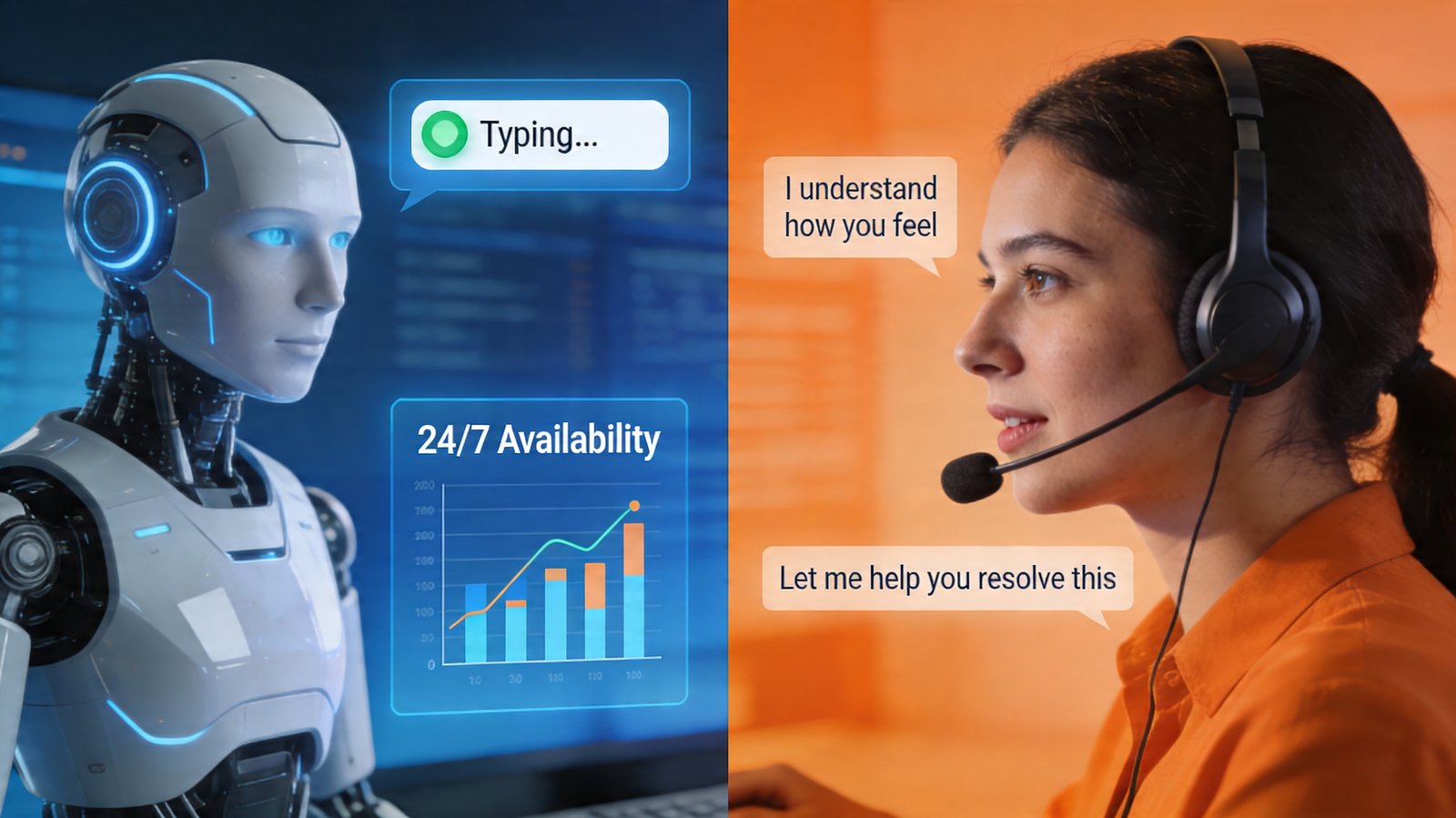
But AI consistently struggles with physical dexterity in unstructured environments, genuine emotional understanding and empathy, creative problem-solving in truly novel situations, ethical judgment in ambiguous contexts, and building authentic interpersonal trust. These aren't minor edge cases — they're the core of an enormous range of valuable human work.
The Jobs Most at Risk (Based on Research)
According to Oxford Economics and McKinsey research, roles with the highest automation risk share common characteristics: they're primarily information processing, they follow explicit rules, they don't require significant physical manipulation of complex environments, and their output can be objectively verified.
High-risk occupational categories include data entry clerks, basic bookkeeping and payroll processing, phone-based customer service for routine queries, document review in legal services, basic radiological image reading, and telemarketing. Notice these are specific tasks within these fields — an accountant who only enters numbers is more at risk than an accountant who provides strategic financial guidance.
The Jobs That Are Genuinely Safe
Roles requiring physical presence in variable environments remain highly resistant to automation — plumbers, electricians, HVAC technicians, and similar skilled trades require situational judgment and dexterity that robots still cannot replicate reliably in real-world settings. Mental health professionals, social workers, and counselors rely on human connection that AI cannot genuinely provide. Strategic business leaders, creative directors, and entrepreneurs operate in domains of genuine novelty and ambiguity where AI can assist but not lead. Teachers who build authentic relationships, nurses who provide hands-on patient care, and coaches who motivate through authentic connection all operate in spaces where human presence is irreplaceable.
The Misunderstood Middle: Augmentation, Not Replacement
The most common AI outcome for professional workers isn't replacement — it's augmentation. AI becomes a powerful assistant that allows a single professional to accomplish what previously required a team. A lawyer using AI for contract review can process five times more contracts. A developer using Copilot writes code 55% faster. A marketing team using AI content tools produces three times more campaigns. In these scenarios, AI doesn't eliminate the job — it raises the bar for what a skilled professional can accomplish, which often means fewer entry-level roles but higher-quality, higher-paying senior roles.
5 Strategies to Future-Proof Your Career Starting Now
Strategy 1: Develop AI Collaboration Skills
The single highest-leverage thing most professionals can do right now is become genuinely competent with AI tools in their specific domain. Learn prompt engineering. Learn which AI tools are best for which tasks in your industry. Professionals who can effectively direct and verify AI output are dramatically more valuable than those who ignore AI or those who accept AI output uncritically.
Strategy 2: Invest in Uniquely Human Skills
Critical thinking, persuasive communication, genuine empathy, creative synthesis, and ethical judgment are simultaneously the hardest things to automate and the most underinvested by most professionals. Any professional development that sharpens these skills compounds in value as AI automates the surrounding routine tasks.
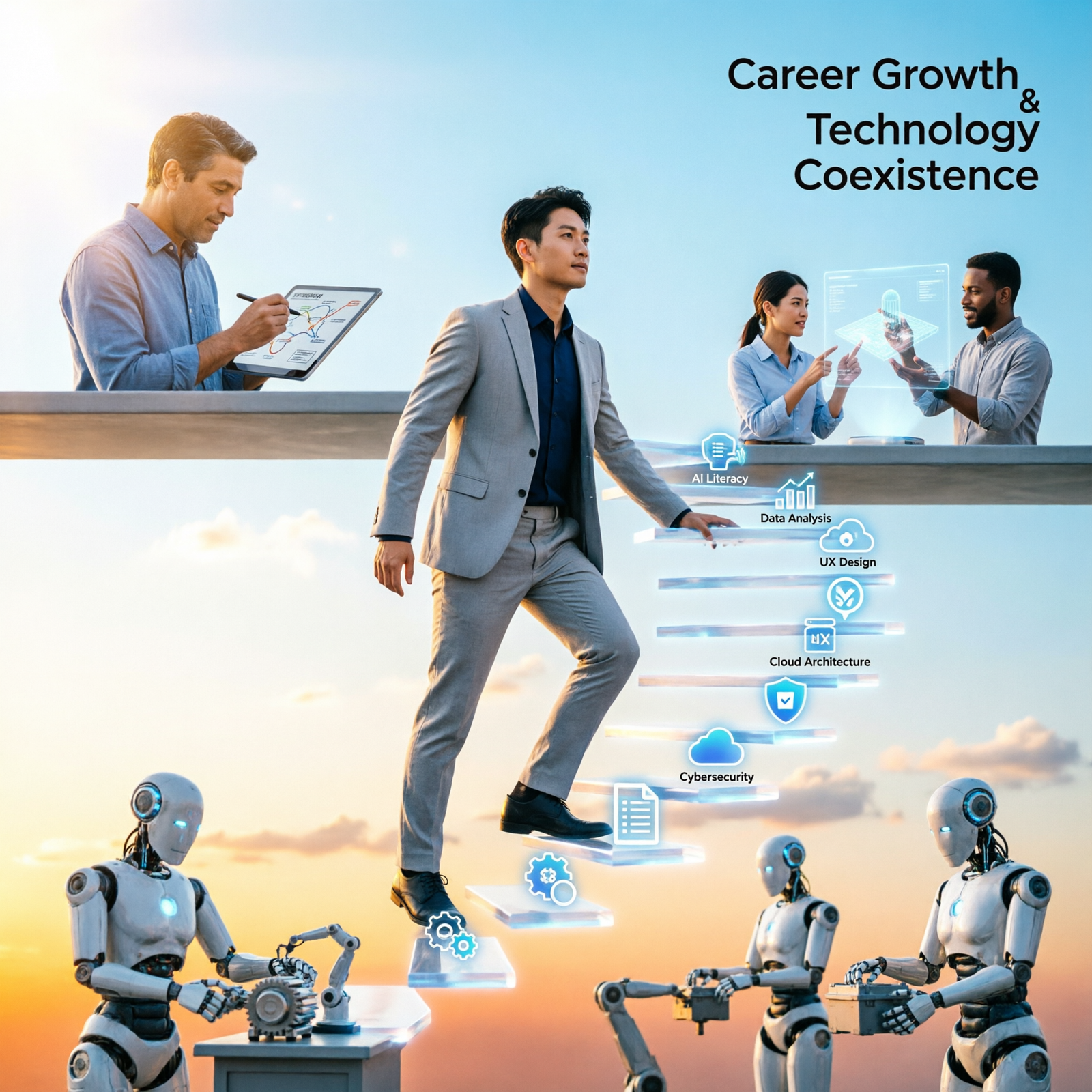
Strategy 3: Move Up the Complexity Ladder
Within your existing role, actively push toward the highest-complexity, highest-judgment tasks. Volunteer for strategy work, client relationships, novel problem-solving, and leadership responsibilities. Move away from tasks that are primarily information processing. This internal mobility is often the fastest route to a more automation-resistant professional position.
Strategy 4: Build Domain Expertise and Credibility
Deep expertise in a specific domain combined with a public reputation for that expertise — through speaking, writing, or teaching — creates a position AI cannot replicate. People hire experts for judgment, not just information. AI provides information; human experts provide judgment backed by demonstrated track records.
Strategy 5: Create Multiple Income Streams
Career resilience in an uncertain environment means not depending on a single employer or single skill set. Freelancing, consulting, passive income from digital products, and investment income all create buffers that make career transitions less catastrophic. Even a modest side income dramatically reduces the fear and urgency that can lead to poor career decisions.
The New Roles AI is Creating
While AI displaces some tasks, it creates genuinely new roles that didn't exist five years ago. AI trainers and evaluators, prompt engineers, AI ethics auditors, machine learning operations specialists, AI integration consultants, and synthetic data specialists are all fast-growing roles. Industries implementing AI also need change management professionals, user experience designers who understand human-AI interaction, and domain experts who can translate business needs to AI capabilities.
Conclusion
The honest answer to 'will AI take your job?' is: it depends on what part of your job you're doing. The tasks that involve pattern recognition, routine decision-making, and information processing are at genuine risk. The tasks that require physical presence, emotional intelligence, creative synthesis, and ethical judgment are not. The professionals who thrive in the AI era will be those who accelerate their shift toward uniquely human value while skillfully leveraging AI for everything else. The window to make that shift proactively — rather than reactively — is right now.